
There’s a specific moment I keep coming back to when I think about how all of this started.
It was Christmas 2025 at my uncle’s house in Cromwell. My cousin Craig was showing off his Pokemon card collection to me, and he and my other cousin Danny proceeded to walk me through the hobby as it stood in 2025. I hadn’t touched Pokemon cards since the original run, but I had been playing the Pocket mobile game and was more curious than I expected. I was looking up sets on my phone at the party, and before I left for the night I had already ordered a Mega Venusaur box on Walmart. I was also flying to Japan in a couple of days, so the timing felt like more than a coincidence.
Japan was a different animal. I found a sealed Stellar Miracle booster box at a Hard Off near Mount Fuji, and that was basically it for me. Once we got to Tokyo for the second half of the trip, my wife and I were at a different Pokemon Center every morning, standing in line for packs. Inferno Ex, Mega Dream Ex, Stellar Miracle. I came home with hundreds of booster packs and no regrets.
When I got home and started opening everything, the difference between the Japanese and English product was impossible to ignore. The Japanese cards just hit differently. Better pulls, better card quality, better holo treatment overall. The English stuff I had picked up before the trip felt flat by comparison. That observation turned into curiosity, and curiosity turned into math. I started looking at what Japanese cards were selling for on eBay and TCGPlayer compared to what it cost to import them. And then I started thinking about whether I could actually build something around it.
I have always wanted to own some kind of retail store. A luxury bag shop, a board game store, something. The idea of a physical location was appealing, but it never fit my life realistically. An online-only operation was a different conversation. And once I started looking into what that would actually take, I couldn’t stop.
That was the moment I stopped thinking like a collector and started thinking like a retailer.
To be clear about something upfront: I am not a business person by training. I’m a web developer. I’ve been building WordPress sites professionally for over 20 years. I know how to build a store. I did not know how to run one.
What followed was months of research, planning, testing, failing at parts of it, figuring those parts out, and eventually arriving at something that actually looks and feels like a real business. That business is Holo Reserve.
What Holo Reserve Actually Is
Holo Reserve is a boutique online TCG shop based in Milford, CT. The focus in this early phase is Japanese Pokemon TCG sealed product and Pokemon Center Japan exclusive accessories that are genuinely hard to find in the US.
The name comes from something that matters to me as a collector. The holographic cards are the ones people actually care about, the ones people remember pulling as kids, the ones that make the hobby worth pursuing. And “Reserve” is about curation, not volume. This is not a warehouse operation. It’s not a marketplace reseller trying to undercut everyone by a dollar. The goal is a well-curated shop with products I would actually buy myself, sold by someone who genuinely knows why they matter.
The store runs on WooCommerce, which is a natural fit given my background. That part I could handle. The rest, sourcing, import logistics, pricing strategy, tax compliance, insurance, business formation, all of it, was new territory.
Building the Store: What It Actually Took
The WooCommerce build was the easy part, relatively speaking. My background meant I could build a store that looks like a real brand rather than a default Shopify template, and I think that matters more in this space than people give it credit for. Most TCG boutiques online share the same two or three looks. Holo Reserve was designed from the ground up with a real brand system: typography, color, a visual identity with actual thought behind it.
The harder parts were everything else.
The business formation. Holo Reserve operates as a DBA under Mops Digital LLC, my existing web development company. That meant filing a trade name with the town of Milford, getting a Connecticut Sales and Use Tax permit, updating my insurance coverage, and setting up a separate business bank account and credit card so the books stay clean. Not exciting. Absolutely necessary.
The sourcing education. I spent a lot of time understanding how Japanese imports actually work before I spent a dollar on inventory. The de minimis exemption that used to let small shipments come in duty-free was eliminated in August 2025. There is now a tariff on shipments from Japan, full stop, and that cost has to be built into every landed cost calculation from the start, or your margins are fiction. Learning to model cost correctly, yen price, forwarding fees, tariff on declared value, international freight, domestic postage to the customer, took longer than I expected and is probably the most important thing I figured out before launching.
The forwarding setup. Pokemon Center Japan ships to Japanese addresses only, so getting their products to the US requires a forwarding service. I researched the main options, landed on a workflow that made sense for my order volume, and tested it with a real order before committing to anything larger. There is a science to consolidating shipments efficiently, and getting that right makes a meaningful difference to the economics.
The Japan sourcing relationship. Beyond the Pokemon Center Japan pipeline, I also established a direct supplier relationship for sealed product. This took longer than expected and required the kind of trust-building you cannot rush. Small test order first, inspect the product, verify authenticity. Then scale. Anyone selling Japanese product who skipped some version of that process is taking a risk they may not have fully thought through.
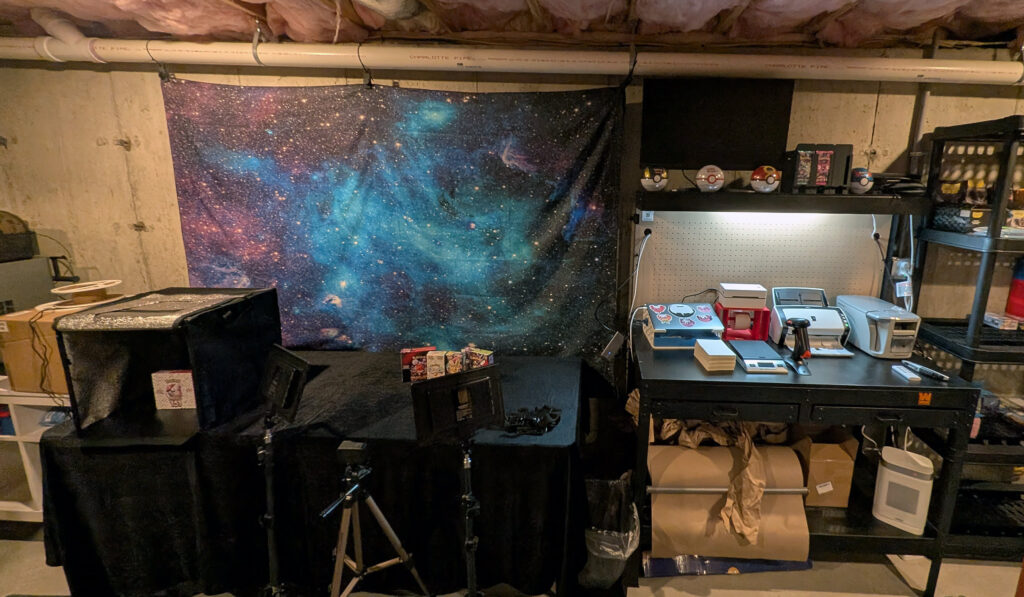
The physical setup. My basement is now a functioning shipping station. Thermal label printer. Water-activated tape dispenser. Barcode scanner for receiving inventory. Organized shelving. It is not glamorous but it is purpose-built, and it works.
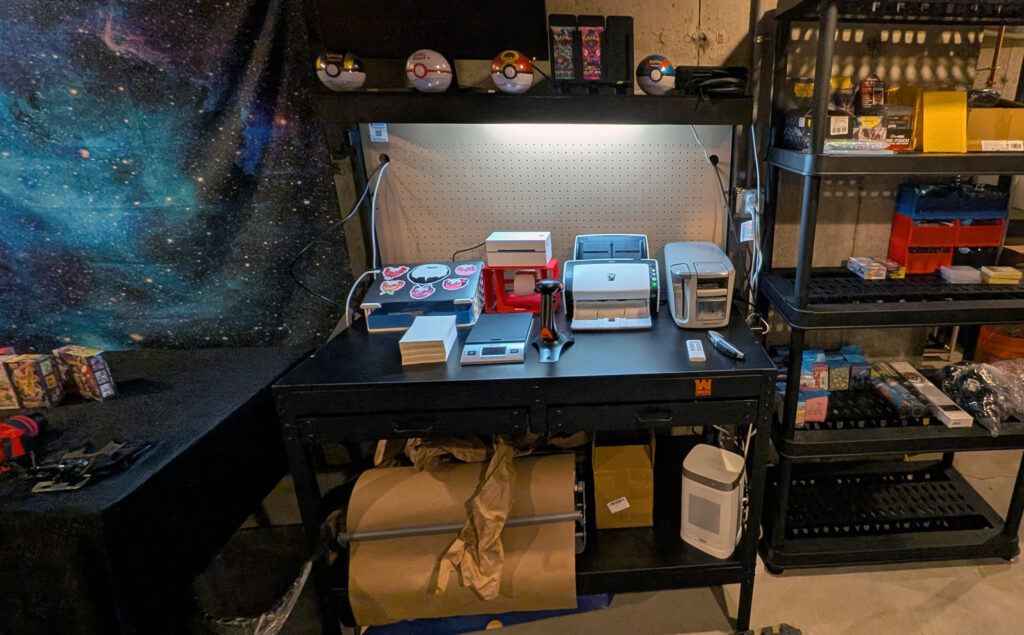
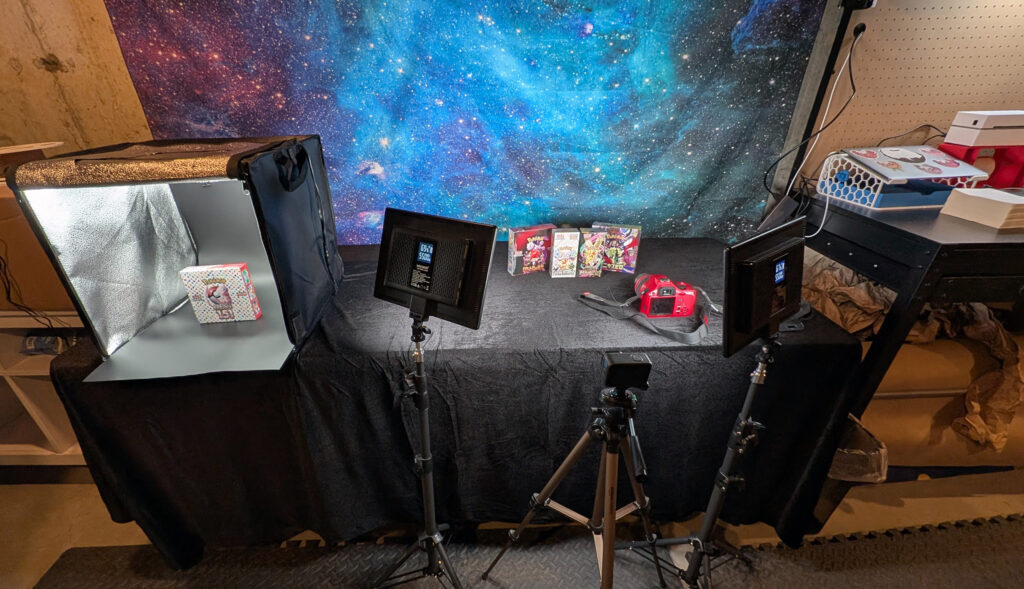
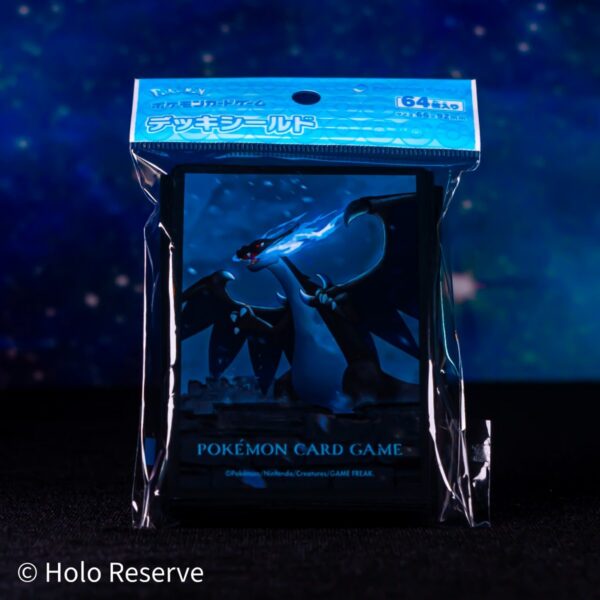
I also put together a product photography setup: high-CRI LED panels, a black background lightbox for clean product shots, and a secondary backdrop for lifestyle images. The photos on this site are mine, shot here. That matters to me.
I also have a 3D printer running for accessories and future Holo Reserve original products, but that is a later conversation.
Why Japanese Product? Why Not Just Sell English?
This is the question I get from people who don’t follow the hobby closely, so I’ll answer it directly.
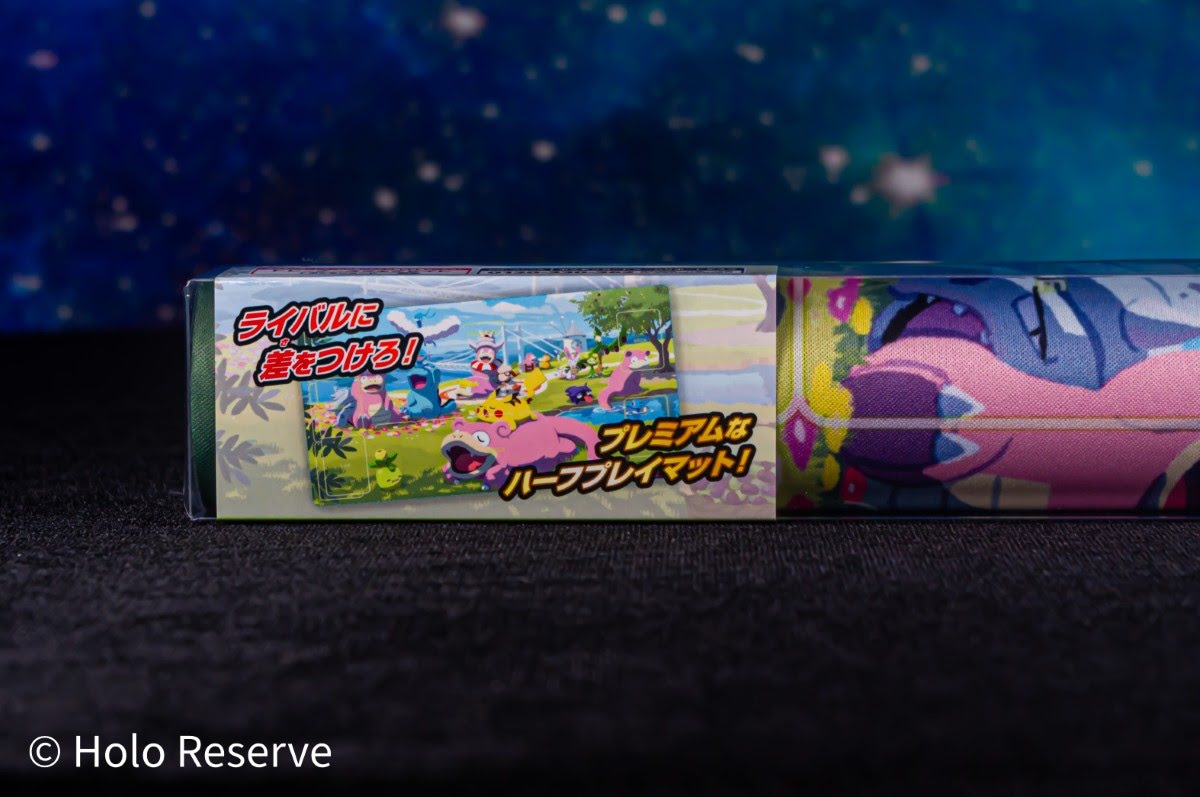
Japanese Pokemon cards have a reputation among serious collectors for a reason. The card stock is different. The holographic treatment is different. The print quality is generally higher. And many Japanese sets include cards and alternate art variations that never make it to English releases at all. I experienced this firsthand the night I came home from Japan and opened everything side by side. Beyond the cards themselves, Pokemon Center Japan produces accessories under their Pokemon Center Original label, sleeves, deck boxes, playmats, that are exclusive to Japan and actively sought out by US collectors who cannot get them any other way.
The business case for it also holds up. Sealed boxes drive traffic and make for great content. The accessories, with their scarcity and exclusivity, are where the real margin lives. That combination is why the Japan focus makes sense as a starting point, and why this is the right first phase for Holo Reserve before expanding into English product and other categories.
English product and board games are coming. That is Phase 2 and beyond. The Japan focus right now is intentional, not a gap.
What’s Coming
I am not going to lay out the entire roadmap here, but there are things in motion that I’m genuinely excited about and will cover in detail as they happen.
The YouTube channel is coming. The kind of content I want to make is the kind I actually want to watch: real import breakdowns, honest product coverage, and a running series on what it is actually like to build a TCG business from scratch in 2026. Faceless production, good lighting, real information. Not hype.
TCGPlayer is coming. Singles will be listed there as the store builds out. Keep an eye on the holoreserve storefront if you are looking for specific cards.
There are things in motion I am not ready to talk about publicly yet. Some of them involve getting product in front of collectors in places beyond this website. When those things are live and I can show them rather than just describe them, I will. Follow along and you will see it first.
The blog is going to be a real resource. I want The Reserve to be the place I wish existed when I started this. I am planning guides on how Japanese import actually works, what Pokemon Center Japan’s purchasing limits mean for the resale market, how to think about card protection for a serious collection, and a lot more. The goal is content that is actually useful, not just content.
Why I’m Doing This
The honest answer is that this is a retirement project running a few years ahead of schedule. The long-term goal is a business that generates real income by the end of the decade without requiring a physical storefront or a staff. WooCommerce, a few focused sales channels, a content engine that actually works, and a product lineup built around what I know.
But the more immediate answer is that I genuinely enjoy this. I like figuring out the import math. I like building the store. I like finding the right sleeve design and knowing it is going to sell. Pokemon has been part of my life for a long time, and turning it into something real, with actual infrastructure and actual strategy behind it, is satisfying in a way that is hard to describe if you have never done it.
If you are someone who has thought about doing something like this yourself, this blog is probably worth following. I am going to share what I am learning, what works, and what doesn’t. Not a blueprint, just an honest account of what building something like this actually looks like from the inside.
That is what The Reserve is for.
If you want to follow this in real time, here’s where to find us:
YouTube: youtube.com/@HoloReserveShop — Subscribe so you don’t miss the first video. Longer-form content and product openings will live there.
Instagram: @holoreserveshop — Product drops, new arrivals, and behind-the-scenes content from the operation.
TikTok: @holoreserveshop — Short-form content, pack openings, and the stuff that’s hard to fit in a blog post. Give it a follow.
Discord: discord.gg/a3zMFNgQZf — Live drop alerts, price checks, and a community worth sticking around for. Join us.
The newsletter signup is in the sidebar, or the footer if you’re on mobile. Subscribers get early notice on product drops and will be the first to know when new things come online.
Comments
Be the first to join the discussion